


Can TAVI Replace Bypass Surgery? Here’s The Truth
Medically Reviewed By
Dr. Harpreet Singh Gillhotra
Director Cardiology
Immediate heart care with everything your heart needs, all under one roof!
Team of experienced medical practitioners backed by new age technology
Established in 1995 to impart timely cardiac care
A heart attack or cardiomyopathy occurs when blood flow to the heart is blocked, damaging heart muscle causing chest pain, chest tightness, shortness of breath, and unexplained fatigue. Immediate medical attention is crucial to treat a patient without it causing permanent heart damage. Our cardiology team provides emergency care and advanced treatments in case of heart attacks.
Heart valve disease occurs when valves don't function properly. Symptoms include shortness of breath, chest pain, and fatigue. Our cardiology team provides diagnosis, treatment, and surgical options such as TAVR (Transcatheter Aortic Valve Replacement), TMVR (Transcatheter Mitral Valve Repair) and Balloon Valvuloplasty.
A sudden loss of heart function, breathing, and consciousness occurs when a person goes under Cardiac Arrest. It's a medical emergency requiring immediate CPR and defibrillation. Heart Hospital Near Me’s cardiac team is equipped with Crash Cart Trolleys to respond quickly and effectively.
Heart failure occurs when the heart is unable to pump enough blood to maintain adequate cardiovascular functioning. Symptoms include shortness of breath, fatigue, and facial/limb swelling. Our cardiologists and Heart specialist in Mohali offer advanced treatments, including medication, implantable cardioverter-defibrillators (ICDs) and Ventricular Assist Devices (VADs)
A heart defect that is present at birth is called congenital heart disease. Our pediatric cardiologists provide specialized care, including diagnosis, treatment, and surgery of Ventricular Septal Defect (VSD), Atrial Septal Defect (ASD), Tetralogy of Fallot (TOF) and more.
Coronary artery disease occurs when arteries narrow down, which reduces blood flow to the heart causing chest pain and shortness of breath. We offer advanced treatments, including minimally invasive angioplasty and stenting in world class 24x7 Cath Labs.
High blood pressure increases the risk of heart disease and stroke. Complete care for management of high blood pressure through medicine, lifestyle and diet. Our cardiologists provide diagnosis, treatment, and lifestyle guidance to manage hypertension.
Arrhythmia is an irregular heartbeat. Symptoms include palpitations, shortness of breath, and fatigue. Our cardiologists offer diagnosis, treatment, and pacemaker insertion therapy to manage arrhythmias.
Pregnancy brings along a serious complication in some women where their blood pressure rises to a point of organ damage. This condition is called Preeclampsia and it typically develops after 20 weeks of pregnancy. Symptoms can be sudden swelling in the limbs, headaches & stomach pain.
Angioplasty is a medical procedure that opens up narrowed arteries of the heart due to calcification and plaque buildup, to restore healthy flow of blood. This procedure is prescribed after a patient is suspected for a blockage in the coronary artery which is diagnosed through an angiography.
It is a major surgery to operate on the heart to repair tears, and replace valves, which often takes place by putting the heart on a heart-lung bypass machine that stops the blood flow to the heart and prevents it from beating so that the heart surgeon may perform heart surgery with ease. An open heart or bypass surgery may be performed in conditions such as coronary artery disease, valve damage, heart failure, or congenital defects wherein medicine stops working as primary treatment.
It is a minimally invasive and highly innovative alternative to an open heart surgery wherein a TAVI trained heart surgeon replaces the heart valve without cutting into the chest. It is performed through a catheter from the groin to the patient’s heart. TAVI procedure is a successful alternative to open heart surgery as patients experience significantly less pain, reduced risk of major complications, shorter hospital stays, and a much faster return to normal activities.
A heart attack occurs when the oxygenated blood from the coronary artery stops flowing to the heart muscle. Absence of oxygenated blood to the heart can cause severe damage to the heart muscle leading to a heart attack and if left untreated, heart failure as well. Medically known as a myocardial infarction, this Coronary Artery Disease is fatal and needs immediate medical intervention.
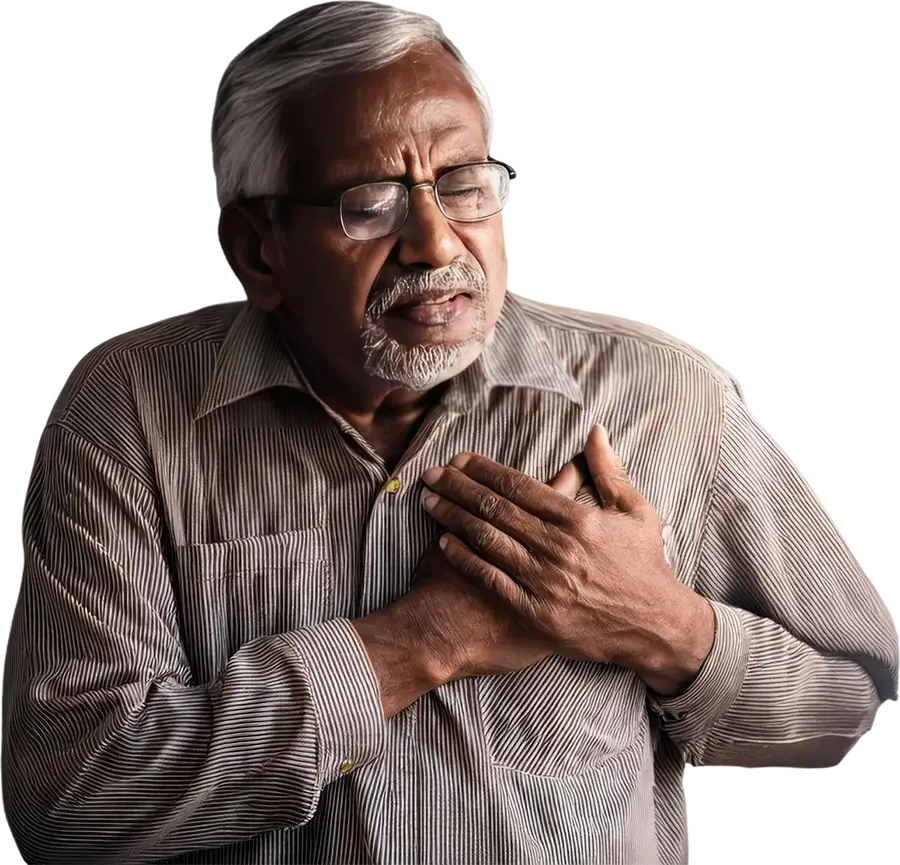
Symptoms of heart attack are fairly visible and hard to miss. A patient suffering from heart attack experiences chest tightness, a fast heart rate, shortness of breath accompanied by dizziness and upper body pain. These symptoms may persist over a period of time often unmissed if it is a silent heart attack but most symptoms need immediate medical attention.
While it is difficult to predict a heart attack, typically individuals with bad lifestyle choices such as alcoholism, drug abuse, excessive unhealthy diet including trans fats with pre-existing underlying conditions like high blood pressure, high cholesterol, and diabetes are more susceptible to a heart attack. Individuals with a family history of coronary artery disease are also considered to be at a high risk of heart attack.
Yes, heart attacks are common in individuals with a family history of coronary artery disease. Having a close relative in the immediate family who has suffered a heart attack doubly increases the chances of their offspring getting this disease however with a healthy lifestyle, stress management and regular screenings, the risk of heart attack can be significantly lowered.
Severe cardiac complications that cannot be managed medically need surgery. Our cardiac surgeon offers 16 years of expertise through a wide range of surgical services including Open Heart Surgery, OFF Pump Bypass Surgery, CABG Surgery, Valve Replacements, Aortic Surgery, Pediatric Heart Surgery.
Heart Surgeon Mohali Chandigarh


Transcatheter Aortic Valve Implantation (TAVI) is an advanced treatment for patients with severe aortic valve disease. It is a minimally invasive procedure that replaces a damaged aortic valve without the need for traditional open-heart surgery, making it highly beneficial for elderly high risk patients.
Medically Reviewed by Director Cardiology - Dr. Harpreet Singh Gilhotra
Chest pain during walking may be indicative to angina due to exertion which can be dangerous. If our chest pain is accompanied by shortness of breath and a fast pulse rate, it is advisable to immediately seek medical treatment.
Yes, pain in the chest due to gas can feel exactly like a heart attack because this gas can press on nerves that go up to the chest. Both gas and heart attack cause severe tightness in the chest and heart burn accompanied by acid reflux.
An angiography is an important step in the diagnosis of coronary artery blockage that is responsible for taking oxygenated blood back to the heart. Additionally it is also used to check the blood flow of the arteries to show narrowing or a tear, especially important for diagnosing stroke and heart attack.
A bypass surgery is categorized as a major surgery involving at least 6-12 weeks of active recovery, though full healing of the chest bone and muscles involved can take up anywhere between 3 to 6 months. A patient who has undergone bypass surgery may gradually return to light activities, non-exerting work, and routine work. Hear from our 60 year old patient’s Recovery after Bypass Surgery
We are seeing an active rise in cases of heart attacks in younger patients due to poor lifestyle choices, unhealthy eating habits and stressful jobs. While some young patients may also be affected by genetics, but, substance abuse and unhealthy lifestyle choices remain a primary cause of plaque buildup causing heart attacks in young patients.
Chest pain could be a serious symptom indicative to a heat attack if accompanied by pain radiating to the jaw or arms, shortness of breath, sudden profuse sweating, dizziness, or nausea. Chest pain is often also associated with heartburn and trapped flatulence, which is why it is important to get an immediate medical opinion for chest pain.
It is possible to lower your resting heart rate by prioritizing low impact yet effective cardiovascular exercises such as brisk walking, bicycling, yoga and deep breathing. Additionally it is also beneficial to stay hydrated, sleep 7-8 hours a day, incorporate healthy eating habits and limit caffeine intake.
A resting heart rate consistently above 100 beats per minute (bpm) is often called tachycardia can be potentially dangerous for the heart muscle and be indicative for coronary artery disease. If your resting heart rate goes beyond 100 bpm for continued periods, it is best to visit a doctor for immediate medical assistance.
Common symptoms of Heart attack include Pain in the chest or chest heaviness, Feeling of prolonged acidity or acid reflux, Pain that extends from the back towards the jaws and the arms, cold sweats, nausea, and dizziness. Some people may experience symptoms like fatigue or indigestion, with a feeling of impending doom. A heart attack needs to be treated immediately by a Heart specialist in Mohali.
Family history has a direct correlation with cardiovascular health such that if one has a history of heart diseases in the family, it can significantly increase the risk of heart attack. Additionally, lifestyle choices, environmental factors can also increase a person's vulnerability to getting cardiovascular diseases. To understand the percentage risk it is advised to meet the Best Heart Doctor Near Me.
Treatment options for heart attack depend mainly on the type and severity of the blockage and any underlying conditions like high blood pressure or high cholesterol. All treatments for heart attack aim at restoring blood flow to the heart which can be done through thrombolytic and antiplatelet injections. Procedures like coronary angioplasty with stenting or coronary artery bypass grafting (CABG) are advised for severe cases of cardiomyopathy.
Reducing the risk of heart disease is fairly uncomplicated if implemented correctly. Making lifestyle changes such as eating a healthy diet, regularly exercising, limiting the intake of alcohol and maintaining a healthy weight while getting adequate sleep can make all the difference. But if you have a family history of cardiovascular diseases, it's best to check in with the Best cardiologist near me for detailed guidance.
Yes, stress is a major factor which directly and indirectly causes heart problems. Stress causes increased inflammation in the body which raises blood pressure and heart rate forming clots and blocking blood flow and oxygen to the heart.
Exercise is generally considered safe and highly beneficial for people with heart conditions, but it must be done under the guidance of Best cardiologist in Mohali, as overexercising can be risky.
Angioplasty is a procedure performed under local anesthesia along with mild sedation aimed at opening up the blocked coronary artery responsible for carrying oxygen rich blood to the heart. An angioplasty is performed by placing stents wherein a balloon is inflated to widen the blocked artery, further it is the metal mesh stent behind is expanded to permanently hold the artery open.
A heart attack is a serious medical condition in which the main coronary artery responsible for taking oxygenated blood back to the heart gets blocked due to fat and calcification as a result of which blood is disproportionately pumped back into the heart causing the heart muscle to weaken and eventually die. This is commonly called a heart attack and medically known as a myocardial infarction. Symptoms may include chest pain and tightness, shortness of breath and fast pulse rate.
Heart failure is a progressive and chronic condition that makes the heart muscle too weak and stiff to pump oxygenated blood. Heart failure takes years of plaque build up and calcification altering the structure of the heart. While heart failure is potentially dangerous, it can be medically managed with medication and lifestyle modifications.
TAVR is a minimally invasive procedure to treat severe aortic stenosis wherein the aortic valve narrows or stiffens. In TAVR the diseased aortic valve is replaced with a biological tissue valve without the risks of an open heart surgery especially beneficial for high risk patients. Main advantages include faster recovery, shorter hospital stay and quicker return to normal activities with better quality of life.
Coronary Artery Bypass Grafting is a type of open heart surgery wherein a healthy blood vessel is borrowed from another body part and the blood flow toward the heart is bypassed through this new artery. It is a safe and traditional method to treat cardiovascular diseases involving heart valves.
A pacemaker is a medical device planted underneath the skin that helps regularize arrhythmia and erratic heartbeat due to cardiovascular diseases. A pacemaker helps treat symptoms associated with arrhythmia such as dizziness, shortness of breath and fatigue.
When a heat valve turns diseased and faulty, it is often replaced by a biological tissue valve through surgical or catheter based techniques It is performed when a valve cannot be repaired and is required to restore proper blood flow and help in easing symptoms such as chest pain or shortness of breath to enhance quality and longevity of life.

Medically Reviewed By
Director Cardiology

Medically Reviewed By
Consultant Cardiologist

Medically Reviewed By
Consultant Cardiologist

Medically Reviewed By
Consultant Cardiologist

Medically Reviewed By
Consultant Cardiac & CTVS Surgeon

Medically Reviewed By
Consultant Cardiologist

Medically Reviewed By
Consultant Cardiac & CTVS Surgeon

Medically Reviewed By
Director Cardiology